Cold Hand Fallacy: Why Past Outcomes Don’t Dictate Future Casino Odds

A long losing streak can make the next result feel different. After several spins land on one color, it becomes natural to expect the opposite color to come out as soon as it feels “due”. The phenomenon is known as the gambler’s fallacy, and it can distort the randomness of a sequence of results.
The same misconception may occur in the case of the analysis of recent outcomes when enter ufabet website (เข้าเว็บยูฟ่า) to choose among the offered casino and betting opportunities. The main issue here is not the degree of the oddness of the streak but the impact of the previous result on the probability of the subsequent one.
What Is the Cold Hand Fallacy?
The cold hand fallacy describes the belief that a recent run of unsuccessful outcomes makes success more likely on the next attempt.
Imagine a hypothetical game where two outcomes are equally likely. If the first five results are A, A, A, A, and A, the sixth result does not automatically become “due” to be B. If each event is independent, the probability remains the same for each new event.
The important point is simple: random systems do not have to correct an unusual-looking streak.
A streak may look meaningful to a person watching it, but appearance alone does not make it predictive.
Why a Losing Streak Does Not Make a Win “Due”
People naturally search for patterns. A sequence that seems too one-sided can create a strong expectation that balance must soon return.
Consider a simplified 50/50 example:
- Result 1: A
- Result 2: A
- Result 3: A
- Result 4: A
- Result 5: A
- Result 6: 50% A and 50% B
The fifth result does not create a mathematical obligation for B to appear next.
This does not mean every gambling event has identical odds. It means that when the underlying events are independent, previous outcomes do not change the next event’s probability.
Independent Events vs. Changing Probabilities
This distinction matters because not every random process works in exactly the same way.
A repeated Random Number Generators (RNG) outcome can be designed so that previous results do not determine the next result. UK Gambling Commission technical requirements state that RNG outputs should be acceptably random and unpredictable, including making the next number computationally infeasible to predict from previous outputs and other available information.
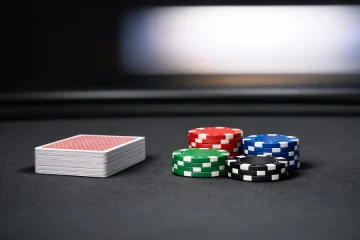
A finite set is different. Consider a shuffled deck of cards. Once cards are removed, the composition of the remaining deck changes. The Gambling Commission specifically notes that outcomes from finite randomised sets can become more predictable as the set gets smaller.
So the correct lesson is not “past results never matter.” It is: past results matter only when the underlying system makes them relevant to future probabilities.
How RNGs and RTP Fit Into Casino Odds
Random Number Generators, or RNGs, are used to produce outcomes in many digital gambling games. In regulated environments, RNGs and game mathematics can undergo statistical and technical testing.
The UK Gambling Commission’s testing procedure includes statistical testing of RNG outputs, review of RNG implementation, verification of game mathematics and theoretical RTP, and testing of actual RTP through simulation and other methods.
RTP or Return to Player, should also be understood correctly. It represents a long-term average rather than a promise about an individual session. A game with a stated RTP does not have to return that percentage during a small number of plays.
That is why a short streak should not be interpreted as proof that a game is “cold” or about to compensate for previous losses.
Why Live Betting Is Different
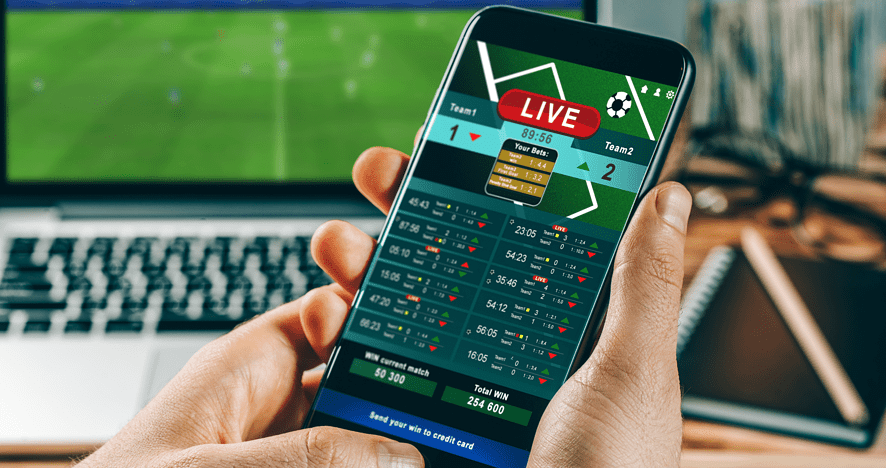
Live football betting provides a useful contrast. During a match, new information arrives continuously. A goal changes the score, a red card can alter team strength, an injury may affect available players, and the remaining time steadily decreases.
These developments can change the estimated probability of future events. Therefore, live odds can move because the information available to the market has changed.
For someone exploring ufabet live football (ufabet ดูบอลสด), this distinction is important. A changing live price should not be confused with a casino game “remembering” previous results. In-play football markets respond to a changing match situation, whereas an independent random outcome does not need to compensate for an earlier streak.
Common Cold-Hand Mistakes to Avoid
Several statements can reveal the fallacy in action:
- “It has lost five times, so it must win next.”
- “That outcome has appeared too often.”
- “The machine is cold.”
- “A recent win means another win is less likely.”
- “The streak proves the game is changing.”
None of these conclusions follows automatically from a sequence of results.
The better approach is to ask whether there is a genuine change in the underlying probability rather than treating the streak itself as evidence.
A Better Way to Think About Past Results
Before using previous results to make a prediction, consider three questions:
- Are the events independent?
- Has the underlying probability actually changed?
- Does the previous result provide new information about the next event?
If the answer to the first question is yes and there is no mechanism connecting outcomes, a previous streak generally does not create an advantage on the next event.
When the system does change, however, past information can matter. A finite deck is one example. A live football match is another because new events continuously change the information available.
What Players Should Take Away
The cold hand fallacy comes from confusing an unusual pattern with a predictive signal. A sequence can be surprising without changing what happens next.
Players reviewing casino games or choosing to Enter UFA Website (เข้าเว็บยูฟ่า) should therefore look at the actual structure of the game rather than assuming that recent wins or losses make an opposite result “due.” Understanding independence, probability, RNGs, and RTP helps separate mathematical information from the emotional pull of a streak.
Past outcomes can tell you what has happened. They do not automatically tell you what happens next.