How Prediction Markets Are Changing the Way Fans Follow Sports
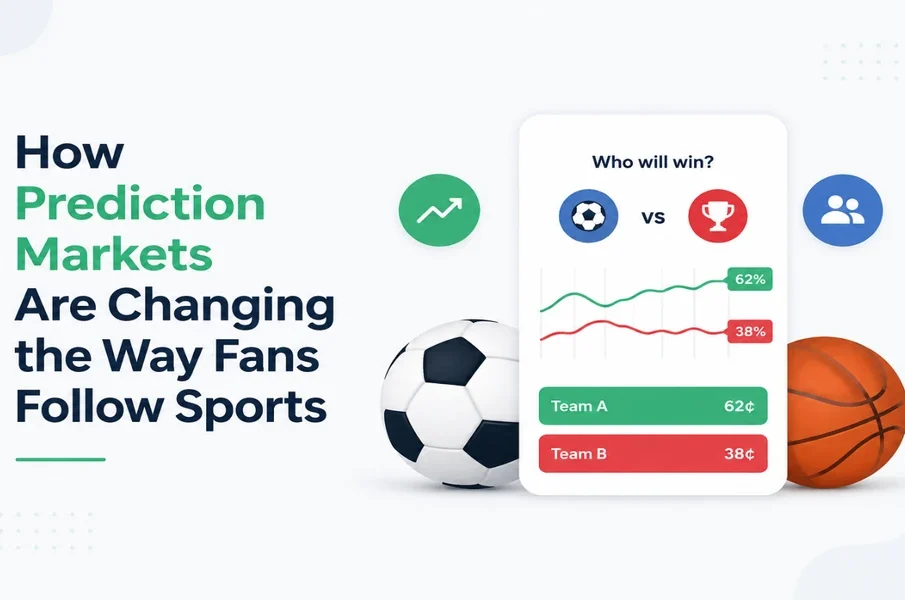
Sports fans have always tried to call the next result before it happens. What’s changed is the tool they use to do it. A growing number of fans are moving past traditional bookmaker odds and turning to a prediction market for sports, where outcomes are priced by traders instead of set by a house.
What Makes a Sports Prediction Market Different
A prediction market works by letting participants buy and sell shares tied to a specific outcome, like a team winning a match or a tournament ending a certain way. The price of that share reflects the market’s current view of how likely the outcome is. If more people believe a team will win, the price of that “yes” share rises. If sentiment shifts, the price moves with it.
This is a meaningful departure from a fixed-odds sportsbook. A bookmaker sets a line and manages its own exposure. A prediction market has no bookmaker at all. The price comes from the collective activity of everyone trading in that market, updated continuously rather than adjusted periodically by one party.
Why the Distinction Matters
Three things separate this model from traditional wagering:
- Pricing is crowd-driven. No single entity sets the number; it emerges from actual trading activity.
- You can exit early. Instead of waiting for a final result, a position can be closed before the event ends if new information changes the outlook.
- The signal updates in real time. Prices move as fast as trading activity does, which matters in fast-changing situations like injury news or lineup changes.
Where This Shows Up Most: Football
Football is one of the clearest examples of this shift in practice. Football predictions built on market pricing rather than fixed odds give fans a different way to track a match, tournament, or full season. Instead of locking in a wager and waiting, a trader can watch how the market’s implied probability shifts as team news breaks, as lineups are confirmed, or as the match itself unfolds.
This applies across match-level outcomes, tournament winners, and longer-running season markets. The appeal isn’t just picking a winner; it’s being able to act on new information before the outcome is locked in.
Who This Actually Serves
Two groups tend to gravitate toward this model.
Casual fans who want more than a fixed line
Fans who already follow team news, injury reports, and form closely often find more value in a market that reacts to that information than in a static line that only updates a handful of times before kickoff.
Traders who think in probabilities
For traders coming from other markets, the appeal is structural. Continuous pricing, the ability to manage a position rather than hold it to the end, and transparent market activity all map more closely to how trading works elsewhere than to how a traditional sportsbook operates.
A Few Things Worth Knowing Before You Start
Prediction markets are not the same everywhere, and rules vary by platform and jurisdiction. Anyone getting started should check local regulations and platform terms before participating. Nothing here should be read as financial advice. It is a description of how these markets function, not a recommendation to trade any specific outcome.
It is also worth being clear-eyed about the tradeoffs. Traditional sportsbooks still offer a simpler, more familiar experience for casual users, along with a wider menu of niche bet types that prediction markets typically don’t replicate. What prediction markets offer instead is transparency in how a price is formed and the flexibility to act on that price before an event resolves.
The Bigger Shift
The rise of sports-focused prediction markets reflects a broader move toward treating sporting outcomes as tradable probabilities rather than fixed bets. Platforms like Limitless have built out dedicated sections for this, including a prediction market for sports covering leagues and tournaments across multiple sports, and a football predictions section built specifically around match outcomes, competitions, and season-long events.
For fans who already think in terms of form, matchups, and shifting probabilities, this model offers a more natural way to engage with the sport they’re already following closely.